
Mobility exercises, often compiled into a PDF guide, are crucial for maintaining an active lifestyle, especially as we age, enhancing flexibility and overall well-being.
A comprehensive mobility PDF can empower individuals to take control of their movement, preventing limitations and supporting adventurous pursuits throughout their golden years.
Resources like Better5.com offer downloadable routines, while programs like Joe D’s Limber 11 emphasize flexibility, proving the value of dedicated mobility work.
What is Mobility and Why is it Important?
Mobility, distinct from flexibility, encompasses the ability to actively control movement through a full range of motion. A mobility exercises PDF often highlights this difference, emphasizing functional movement patterns. It’s about having the strength and control to use your available range, not just achieving it passively.
Why is this vital? Our bodies are our vehicles for life. Maintaining mobility allows us to perform daily tasks with ease, participate in activities we enjoy, and prevent injuries. As we age, mobility naturally declines, impacting independence and quality of life; A well-structured PDF can counteract this.
Furthermore, mobility impacts athletic performance and recovery. Resources suggest that top athletes prioritize mobility, demonstrating its importance in preventing limitations and maximizing potential. A mobility PDF provides accessible tools to improve movement quality for everyone.
Benefits of Regular Mobility Work
Consistent engagement with a mobility exercises PDF yields numerous benefits. Improved posture and reduced pain are frequently reported outcomes, stemming from addressing muscle imbalances and joint restrictions. Enhanced athletic performance is another key advantage, allowing for greater power, efficiency, and reduced injury risk.
A mobility PDF can also contribute to better overall movement quality, making everyday activities easier and more comfortable. This is particularly important for maintaining independence in later life, enabling continued participation in desired activities. The shoulder, being the most flexible joint, benefits greatly from targeted mobility work.
Moreover, regular mobility routines, often found within a comprehensive PDF guide, can improve body awareness and proprioception – your sense of where your body is in space – leading to greater control and coordination.

Understanding Different Types of Mobility Exercises

Mobility exercises PDF guides often detail dynamic stretching, static stretching, joint mobilization, and self-myofascial release (foam rolling) for optimal movement.
Dynamic Stretching
Dynamic stretching, frequently detailed within a mobility exercises PDF, involves controlled movements that take your joints through their full range of motion. Unlike static stretching, it doesn’t involve holding a stretch for a prolonged period.

Examples commonly found in these guides include arm circles and leg swings, often recommended as part of a warm-up routine. These movements prepare your muscles for activity by increasing blood flow and improving flexibility.
A well-structured PDF will illustrate how dynamic stretches enhance performance and reduce the risk of injury. They are particularly beneficial before workouts or activities requiring a wide range of motion, promoting fluidity and responsiveness.
These stretches are a cornerstone of proactive mobility, ensuring your body is ready to move efficiently and effectively.
Static Stretching
Static stretching, often included in comprehensive mobility exercises PDF guides, involves holding a stretch in a challenging but comfortable position for a period of time, typically 20-30 seconds. This method aims to lengthen muscles and increase flexibility.
While traditionally performed post-workout, a PDF might also suggest incorporating static stretches into a cool-down routine or as a separate mobility session. It’s crucial to avoid bouncing or forcing the stretch, as this can lead to injury.
These guides often emphasize the importance of proper form and breathing during static stretches. Though less emphasized for warm-ups, static stretching contributes to long-term flexibility gains and improved range of motion.
A well-designed PDF will demonstrate various static stretches targeting different muscle groups, promoting balanced flexibility.
Joint Mobilization
Joint mobilization exercises, frequently detailed within a mobility exercises PDF, focus on restoring optimal movement within the joint capsules themselves. Unlike stretching muscles, these techniques address restrictions in joint range of motion.
A comprehensive PDF guide will illustrate controlled movements designed to gently encourage the joint to move through its full, pain-free arc. These exercises often involve self-mobilization techniques or assisted movements.
It’s vital that a mobility PDF stresses the importance of performing these exercises with precision and avoiding any forceful manipulation. Proper form prevents injury and maximizes effectiveness.
Joint mobilization is particularly beneficial for individuals with limited range of motion or those recovering from injuries, as highlighted in training resources.
Self-Myofascial Release (SMR) — Foam Rolling
Self-Myofascial Release (SMR), commonly known as foam rolling, is a cornerstone of many mobility exercises PDF guides. It targets the fascia – the connective tissue surrounding muscles – to release tension and improve flexibility.
A well-structured PDF will demonstrate proper foam rolling techniques for various muscle groups, emphasizing slow, controlled movements over the foam roller. It should also detail appropriate pressure levels and duration.
The benefits of SMR, as often outlined in these guides, include reduced muscle soreness, increased range of motion, and improved posture. It’s a valuable tool for pre- and post-workout recovery.
Resources emphasize that SMR isn’t about pain; it’s about finding tender spots and applying gentle pressure to release tightness, enhancing overall movement quality.
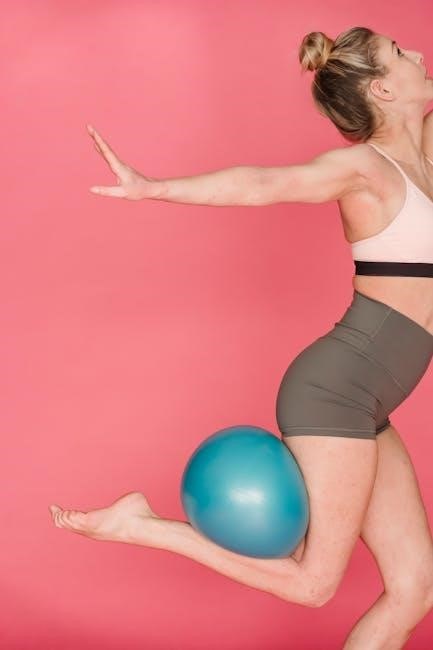
Full Body Mobility Routine: A Comprehensive Guide
Mobility exercises PDF guides often detail routines, starting with warm-ups like arm circles and leg swings, progressing to targeted movements for optimal body function.
Warm-up Exercises (5-10 minutes)
Warm-up routines, frequently detailed within a mobility exercises PDF, are essential for preparing the body for more dynamic movements. A chair or stable surface can assist with balance during these initial stages.
Arm circles, both forward and backward, gently increase shoulder mobility and blood flow. Follow this with leg swings – both front-to-back and side-to-side – to loosen hip flexors and hamstrings.
These exercises should be performed with controlled movements, focusing on range of motion rather than speed. A proper warm-up, lasting 5-10 minutes, significantly reduces the risk of injury and enhances the effectiveness of subsequent mobility drills. Remember to breathe deeply throughout, promoting relaxation and preparing your muscles for activity.
Arm Circles
Arm circles, a foundational exercise often included in mobility exercises PDFs, are a simple yet effective way to enhance shoulder joint mobility and increase blood flow to the surrounding muscles. This exercise prepares the shoulder complex for more complex movements.
Begin by standing with feet shoulder-width apart and arms extended to the sides at shoulder height. Perform small, controlled circles forward for 30-60 seconds, gradually increasing the circle size; Then, reverse the direction and perform backward arm circles for the same duration.
Focus on maintaining good posture and avoiding shrugging your shoulders. This exercise is easily scalable and can be modified based on individual fitness levels and any existing shoulder limitations.
Leg Swings
Leg swings are a dynamic mobility exercise frequently featured in comprehensive mobility exercises PDFs, designed to improve hip flexor and hamstring flexibility, and prepare the lower body for activity. They enhance range of motion in the hips and knees.
To perform, find a stable surface for balance. Stand tall and swing one leg forward and backward in a controlled manner, keeping your core engaged. Repeat 10-15 times per leg, then switch to side-to-side swings, again for 10-15 repetitions.
Maintain a slight bend in the standing knee and avoid overextending the swinging leg. This exercise is excellent for warming up before workouts or as part of a daily mobility routine.
Mobility Exercises for the Neck and Shoulders
A well-structured mobility exercises PDF will invariably include routines targeting the neck and shoulders, areas prone to tension and limited range of motion. These exercises are vital for posture and preventing discomfort.
Neck rotations gently move the head in a circular motion, improving flexibility. Shoulder cars, involving circular arm movements, enhance shoulder joint mobility. Thoracic spine rotations, twisting the upper back, improve spinal mobility.
Perform 10-15 repetitions of each exercise, focusing on controlled movements. Remember the shoulder is the most flexible joint, so prioritize gentle, mindful stretches. These exercises, often detailed in mobility PDFs, contribute to overall upper body health.
Neck Rotations
Neck rotations, a staple in any comprehensive mobility exercises PDF, are a simple yet effective way to improve cervical spine flexibility and reduce tension. Begin by sitting or standing with a straight spine and relaxed shoulders.
Slowly lower your chin towards your chest, then gently rotate your head to the right, as if looking over your shoulder. Hold for a brief moment, feeling a stretch in the side of your neck. Repeat on the left side.
Continue rotating between sides, performing 10-15 repetitions. Avoid forcing the movement; listen to your body and stop if you feel any pain. A detailed mobility PDF will often include variations and modifications.
Shoulder Cars
Shoulder cars, frequently featured in mobility exercises PDF guides, are excellent for enhancing shoulder joint range of motion and improving posture. This exercise involves creating small, controlled circles with your shoulders.
Begin by standing or sitting with good posture, arms relaxed at your sides. Slowly roll your shoulders forward, up, back, and down, as if drawing a circle. Perform 10-15 repetitions in one direction, then reverse the direction.
Focus on maintaining a smooth, controlled movement throughout the exercise. A well-designed mobility PDF will emphasize proper form to prevent injury. This exercise helps counteract the effects of prolonged sitting and desk work.
Thoracic Spine Rotations
Thoracic spine rotations are a key component of many mobility exercises PDF routines, targeting the mid-back to improve spinal flexibility and posture. Limited thoracic mobility can contribute to shoulder and hip issues, making this exercise vital.
To perform, sit comfortably with your knees bent and feet flat on the floor. Gently twist your upper body to one side, keeping your hips stable. You can use your hands to support the rotation, placing them behind your head or on your knees.
Hold the rotated position for a few seconds, then slowly return to center. Repeat 10-15 times on each side. A comprehensive mobility PDF will illustrate proper alignment and breathing techniques for optimal results.
Mobility Exercises for the Hips and Lower Body
A well-structured mobility exercises PDF will dedicate significant attention to the hips and lower body, as these areas often restrict movement and contribute to pain. Exercises like anchored hip extensions, couch stretches, and inner thigh T-spine rotations are commonly included.
Anchored hip extensions (12 reps per side) improve hip flexor mobility, while the challenging couch stretch targets the quads and hip flexors simultaneously. The inner thigh T-spine rotation (20 reps per side) combines hip and spinal mobility.
These exercises, detailed within a mobility PDF, enhance range of motion, improve posture, and prepare the lower body for various activities. Proper form and controlled movements are crucial for maximizing benefits and preventing injury.
Anchored Hip Extensions
A comprehensive mobility exercises PDF should thoroughly explain the anchored hip extension, a vital exercise for improving hip flexor mobility. This exercise involves anchoring one leg – often using a sturdy object or the ground – and extending the opposite hip forward.
The PDF should detail proper form: maintaining a straight back, engaging the core, and feeling a stretch in the front of the anchored hip. Performing 12 repetitions per side is a common recommendation, as highlighted in various routines.
This exercise, when correctly executed as outlined in a mobility PDF, helps counteract the effects of prolonged sitting and enhances lower body flexibility. It’s a foundational movement for improved posture and athletic performance.
Couch Stretch
A well-structured mobility exercises PDF must include the couch stretch, a challenging yet highly effective exercise for improving hip flexor and quadriceps flexibility. The PDF should clearly illustrate the setup: positioning one shin against a wall or couch, with the knee on the ground.
Detailed instructions are crucial, emphasizing maintaining an upright torso and gently pushing the hips forward to intensify the stretch. A mobility PDF should advise starting slowly and gradually increasing the intensity as flexibility improves.
Performing this stretch, as guided by a mobility PDF, can alleviate lower back pain and improve overall hip mobility. It’s often recommended alongside other hip-opening exercises for a comprehensive routine.
Inner Thigh T-Spine Rotation
A comprehensive mobility exercises PDF should feature the Inner Thigh T-Spine Rotation, a dynamic movement enhancing both thoracic spine mobility and inner thigh flexibility. The PDF should detail the starting position: kneeling with legs wide, hands clasped behind the head.
Clear instructions are vital, explaining how to rotate the torso towards one leg, feeling a stretch in the inner thigh and upper back. A good mobility PDF will emphasize controlled movements and breathing synchronization.
This exercise, as demonstrated in a quality mobility PDF, improves posture and reduces stiffness. Performing 20 repetitions per side, as suggested by training resources, maximizes benefits.
Mobility Exercises for the Ankles and Feet
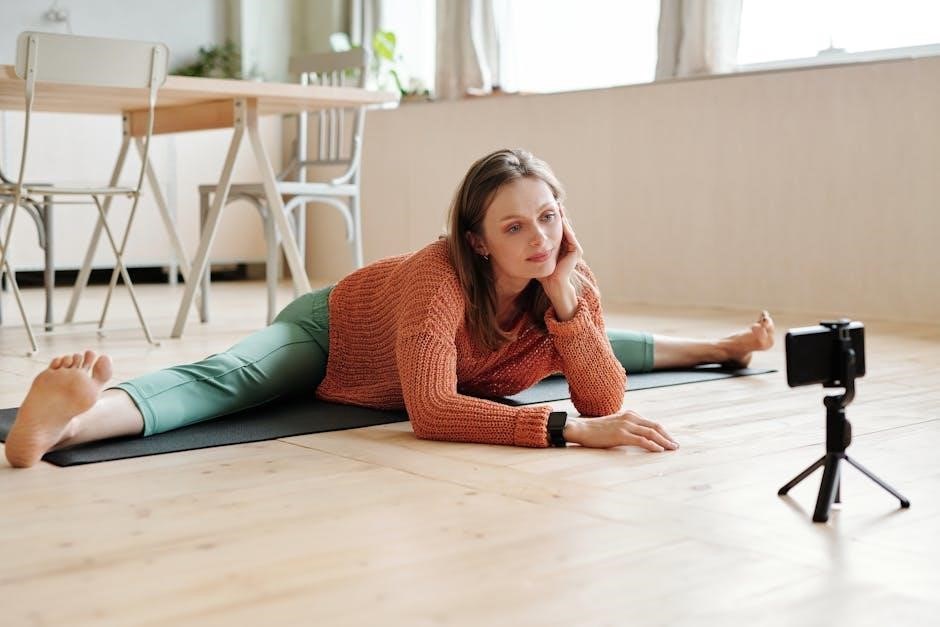
A well-structured mobility exercises PDF must dedicate a section to ankle and foot mobility, often overlooked yet crucial for overall movement health. The PDF should clearly illustrate exercises like Ankle Circles, promoting range of motion and reducing stiffness.

Detailed instructions for Toe Touches, emphasizing controlled movements and proper form, are essential. A quality mobility PDF will explain how limited ankle mobility impacts other joints, highlighting its importance.
Including variations and modifications within the PDF caters to different fitness levels. Emphasize the benefits of regular practice, contributing to improved balance and injury prevention, making it a vital component of any mobility routine.
Ankle Circles
A comprehensive mobility exercises PDF should dedicate a clear section to Ankle Circles, detailing proper execution for optimal benefit. The PDF must illustrate the exercise – seated or standing, lifting one foot slightly off the ground.
Instructions should emphasize slow, controlled rotations in both clockwise and counter-clockwise directions. A good mobility PDF will specify repetitions (e.g., 10-15 circles per foot) and sets (e.g., 2-3 sets).
Highlighting the benefits – increased ankle range of motion, improved circulation, and reduced stiffness – is crucial. The PDF should also include common mistakes to avoid, ensuring correct form and maximizing the exercise’s effectiveness within a broader mobility routine.
Toe Touches
A well-structured mobility exercises PDF will include Toe Touches as a foundational exercise for lower body and spinal flexibility. The PDF should clearly demonstrate the movement: standing with feet hip-width apart, slowly bending forward from the hips, reaching towards the toes.
Instructions must emphasize keeping the back as straight as possible and avoiding rounding. A quality mobility PDF will suggest modifications for varying flexibility levels – bending the knees if needed. Repetitions (e.g., 10-15) and sets (e.g., 2-3) should be clearly stated.
The PDF should explain the benefits: improved hamstring flexibility, spinal mobility, and overall posture. It should also caution against forcing the stretch, prioritizing controlled movement within a comfortable range.

Creating Your Own Mobility PDF
Creating a mobility PDF involves selecting essential exercises, structuring them logically, and designing for user-friendliness – ensuring accessibility and ease of use for all fitness levels.
Essential Exercises to Include
When compiling a mobility exercises PDF, prioritize a full-body approach. Include foundational movements like arm circles and leg swings for a dynamic warm-up, preparing muscles for deeper work.
Neck rotations and shoulder cars address upper body stiffness, while thoracic spine rotations improve mid-back mobility. For the lower body, anchored hip extensions, the challenging couch stretch, and inner thigh T-spine rotations are invaluable.
Don’t neglect ankle and foot health; ankle circles and toe touches enhance lower limb function. Consider incorporating exercises from established routines like Joe D’s Limber 11 for proven effectiveness. A well-rounded PDF should offer modifications for varying fitness levels, ensuring accessibility for everyone.
Structuring Your PDF for Easy Use
A well-structured mobility exercises PDF should begin with a clear introduction outlining the benefits of regular mobility work. Categorize exercises by body region – neck, shoulders, hips, ankles – for intuitive navigation.
Each exercise entry should include a concise description, step-by-step instructions, and a visual aid (image or diagram). Include rep/set recommendations and modification options for different fitness levels.
Consider adding a warm-up and cool-down section. A table of contents with clickable links enhances usability. Design for readability with clear headings, sufficient white space, and a consistent font. PDF accessibility features, like alt text for images, are crucial for inclusivity.
Tips for Designing a User-Friendly PDF
Creating an effective mobility exercises PDF requires prioritizing user experience. Employ a clean, uncluttered layout with ample white space to avoid overwhelming the reader. Use high-quality images or illustrations demonstrating proper form for each exercise.
Choose a legible font size and style, ensuring readability across various devices. Incorporate color strategically – for headings, highlights, or to differentiate sections – but avoid excessive use.
Optimize the PDF for file size to facilitate easy downloading and sharing. Add interactive elements like clickable links to resources or related exercises. Finally, test the PDF on different platforms to ensure consistent formatting and functionality.

Resources for Finding Mobility Exercises
Online platforms like Better5.com offer downloadable mobility PDF routines, while Joe DeFranco’s website provides the popular Limber 11 flexibility program.
TrainHeroic also presents comprehensive guides, offering a wealth of exercises from head to toe, readily available for implementation.
Online Platforms and Websites
Numerous online resources provide access to mobility exercises and downloadable PDF guides. Better5.com stands out, offering a full-body mobility routine in a convenient PDF format, requiring only a chair for support – ideal for all fitness levels.
TrainHeroic presents a comprehensive guide encompassing exercises from head to toe, making it a valuable resource for building a personalized routine. Websites dedicated to fitness and athletic training frequently host articles and downloadable content focused on improving mobility.
Exploring platforms like YouTube can also yield beneficial results, with countless channels demonstrating various exercises. Remember to critically evaluate the source and ensure the exercises align with your individual needs and capabilities. Always prioritize proper form and listen to your body.
Recommended Mobility Programs (e.g., Joe D’s Limber 11)
Joe DeFranco’s Limber 11 consistently receives high praise within the fitness community, particularly in Brazilian Jiu-Jitsu circles, as a highly effective daily mobility routine. Many users on platforms like Reddit highlight its benefits for increasing flexibility and range of motion.
This program, often available for purchase or through DeFranco’s training website (defrancostraining.com), provides a structured approach to improving joint health and movement quality. While not always a free PDF, the investment is considered worthwhile by many practitioners.
Other programs may offer downloadable mobility exercise PDFs as part of a larger training package. Researching and comparing different programs based on your specific goals and needs is crucial for optimal results. Consider factors like exercise variety, intensity, and accessibility.

Safety Considerations and Precautions
Always listen to your body during mobility exercises, modifying movements as needed. A PDF guide shouldn’t replace mindful practice and proper form.
Adjust exercises to your fitness level, avoiding pain. Prioritize controlled movements over extreme ranges of motion for safe, effective results.
Listening to Your Body
Prioritizing self-awareness is paramount when utilizing a mobility exercises PDF. Your body provides crucial feedback; ignoring discomfort can lead to injury. A well-designed PDF should emphasize this, but ultimately, you are responsible for interpreting signals.
Distinguish between the sensation of a stretch and actual pain. Stretching should feel challenging, yet comfortable. Sharp, stabbing, or radiating pain indicates a problem – immediately stop the exercise.
Don’t push beyond your current range of motion. Gradual progression is key. A mobility PDF offers guidance, but your body dictates the pace. Respect limitations, especially if you have pre-existing conditions. Remember, consistency and mindful movement are more valuable than forcing flexibility.
Hydration and adequate warm-up also contribute to safe practice.
Modifications for Different Fitness Levels
A versatile mobility exercises PDF acknowledges that individuals begin at varying fitness levels. It should offer modifications to accommodate beginners, intermediate, and advanced practitioners.
Beginners might reduce the range of motion, decrease repetitions, or utilize support (like a chair) for balance, as suggested by resources like Better5.com. Intermediate users can perform exercises as described, focusing on proper form.
Advanced individuals can increase repetitions, hold stretches longer, or add resistance bands to intensify the challenge. A good PDF will illustrate these variations.
Consider scaling exercises based on individual joint health and flexibility. If an exercise causes discomfort, modify it or choose an alternative. Prioritize safe and effective movement over achieving a specific pose.